
Out of the Fire and into the Future: How AI is Reshaping HR
Watch the replay
Fill out the form to save your spot

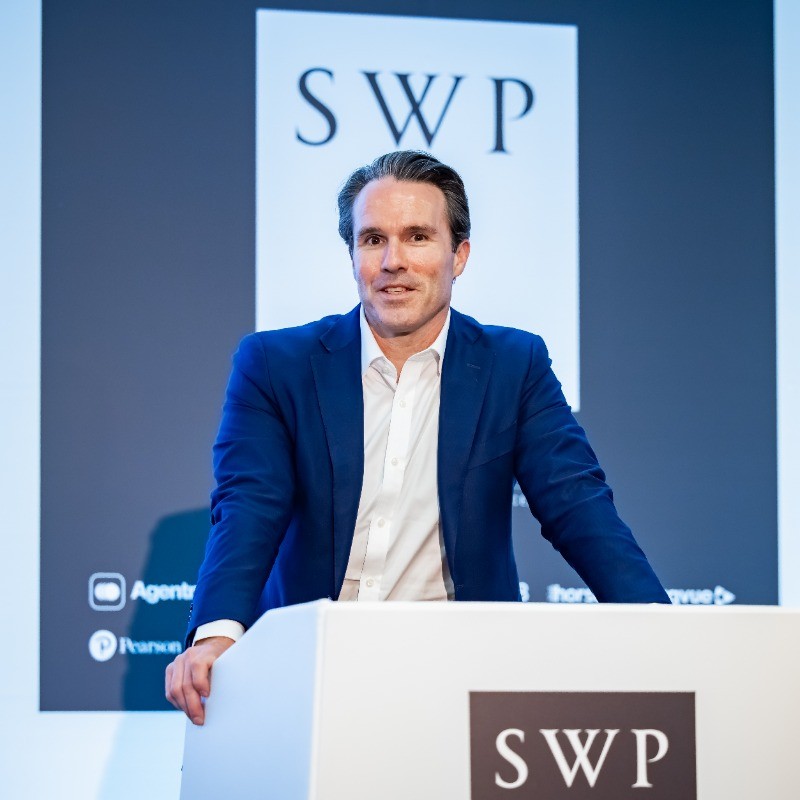
In this session, Nick Kennedy of the Workforce Planning Institute explores how AI is changing HR at the level of work and decision-making. By examining the automation potential of specific HR roles and duties, this session shows how responsibilities are shifting, where human judgment remains essential, and how HR functions are evolving to support enterprise priorities.
Join this webinar to learn:
- Where AI can meaningfully automate HR work and where leadership, judgment, and context still matter most
- How HR roles evolve as tasks are automated, enabling HR to focus on higher-value, strategic contributions
- Which capabilities CHROs must build to future-proof the function, and practical ways to begin that transition today
This program has been approved for 1 Business recertification credit hour toward aPHR®, aPHRi™, PHR®, PHRca®, SPHR®, GPHR®, PHRi™ and SPHRi™recertification through HR Certification Institute® (HRCI®).


Webinar Transcript
Webinar Transcript
John Lynch, TalentNeuron
Thank you so much for joining us today.
As you settle in, a quick note on today’s session. Thiswebinar has been pre-recorded to allow us to bring together speakers acrosstime zones. While the presentation itself is recorded, our team is live in thechat to answer questions throughout the session.
You’ll also find supporting materials in the Docs section,including the presentation, links to upcoming Workforce Planning Instituteevents, and the HRCI credit information that we’ll share again at the end.
With that, I’m delighted to introduce our guest, Nick Kennedyfrom the Workforce Planning Institute.
Nick, over to you.
Nick Kennedy, Workforce Planning Institute
Thanks, John. I’m delighted to be here—and grateful not tobe presenting at three o’clock in the morning from Australia.
This is actually the first time John and I have formallyrecorded a session together. We collaborate regularly across research, events,and industry initiatives, so it’s great to finally bring that collaborationinto a shared presentation.
Today’s session builds on research originally presented at aconference in Amsterdam last year. That session focused on talent intelligenceand workforce strategy, supported by analysis from TalentNeuron. Because theoriginal presentation wasn’t recorded, we wanted to make the insights availableto a broader audience.
The session is titled “Out of the Fire and Into theFuture,” and it examines how AI and automation are reshaping HR work at thetask and skill level.
By way of introduction, I’m a former practitioner andconsultant and now serve as an SWP Ambassador with the Workforce PlanningInstitute.
The Workforce Planning Institute is a global professionalassociation dedicated to advancing strategic workforce planning. We supportpractitioners through training, certification programs, conferences, andresearch initiatives delivered across North America, Europe, and APAC.
Our partnership with TalentNeuron plays an important role inensuring our programs remain aligned with real labor market developments andevolving enterprise workforce challenges.
Nick Kennedy
I like to begin sessions by setting the broader context.
Organizations today are operating amid significant globaldisruption—economic uncertainty, geopolitical instability, and environmentalpressures. Each of these factors influences workforce decisions.
However, none is reshaping work as rapidly as artificialintelligence.
If you had asked me in 2024 whether AI was primarily anoperational enabler, I would have agreed. Over the past eighteen months, thatperspective has changed. AI has moved beyond experimentation and is now astrategic imperative.
Organizations are no longer asking whether AI will affectwork. They are asking how quickly they must adapt.
Nick Kennedy
This session responds to a phrase many of us hearfrequently:
“HR needs to become more strategic.”
It’s a common expectation—but rarely defined.
What does becoming more strategic actually mean?
Why is it necessary now?
And what capabilities must change for HR teams to operate differently?
Working with TalentNeuron, we explored these questions usinglabor market intelligence and automation analysis.
Before moving further, I’ll hand over to John to discusswhat we’re seeing in demand for strategic workforce planning skills across thelabor market.
John Lynch
Thanks, Nick.
One of the most interesting trends we’re observing is thatworkforce planning capability is no longer confined to HR.
Across industries, demand for skills such as headcountplanning, scenario modeling, and long-term workforce strategy has grownrapidly. Since 2020, postings requesting strategic workforce planning skillshave expanded significantly, reaching roughly 50,000 postings globally in 2025.
Organizations are responding to uncertainty by strengtheningplanning capability across the enterprise—not just within HR or talentacquisition functions.
Nick Kennedy
That aligns closely with what we see in practice.
Strategic workforce planning often begins within HR, but asorganizational maturity increases, responsibility becomes distributed acrossfinance, operations, and technology functions.
Ultimately, workforce planning evolves into an enterprisecapability rather than a single functional activity.
What’s encouraging is that we now see this evolutionreflected directly in hiring data.
John Lynch
Exactly.
We’re seeing workforce planning skills appear acrossfinance, operations, supply chain, technology, and analytics roles. Financeorganizations are often early adopters because planning disciplines alreadyexist there.
Technology teams are also increasingly involved,particularly as AI and automation reshape capacity planning and productivityexpectations.
Nick Kennedy
This brings us to the research behind today’s discussion.
Rather than asking whether jobs disappear, we examined howautomation affects work at the task level.
Using TalentNeuron’s automation analysis capabilities, weassessed:
- which tasks are most likely to be automated,
- how remaining work evolves,
- and which skills become more critical as automation progresses.
We analyzed twelve HR roles and selected three for deeperdiscussion today:
- HR Operations Specialist
- HR Business Partner
- Talent Acquisition Specialist
The broader dataset also included roles across learning anddevelopment, compensation and benefits, employee relations, workforce planning,workforce analytics, employee experience, and talent management.
John Lynch
There’s a great deal of discussion in the market about AI’simpact on HR, but much of it remains speculative.
Our objective was to ground the conversation in measurabledata—understanding which skills genuinely increase in value and which may betemporarily overstated.
Nick Kennedy
A common assumption is that automation primarily replacesadministrative work. While that’s partially true, it doesn’t capture the fullpicture.
Automation shifts emphasis toward capabilities that remaindistinctly human—strategic thinking, stakeholder engagement, future planning,and influence.
Importantly, this analysis does not suggest wholesale jobreplacement. What we’re observing is partial automation, where tasksshift and roles evolve rather than disappear.
Nick Kennedy
We then examined automation potential across roles.
Overall automation exposure was highest for HR OperationsSpecialists, moderate for HR Business Partners, and lowest for TalentAcquisition roles.
When separated by automation type, HR Operations rolesshowed the greatest AI automation potential, while Talent Acquisition rolesshowed the lowest—reflecting the increasingly strategic nature of thatfunction.
John, could you briefly explain how TalentNeuron definesautomation categories?
John Lynch
Absolutely.
No role is entirely automatable. Automation applies at thetask level.
We categorize automation into three primary types:
- Artificial Intelligence, which automates analytical or cognitive tasks using machine learning;
- Business Process Automation, which addresses repetitive, rule-based workflows; and
- Industrial Automation, involving robotics and physical processes, which is less relevant for HR roles.
Our approach allows organizations to understand automationexposure with precision—role by role and task by task—so they can planworkforce transformation proactively rather than reactively.