
The Great Reallocation: Understanding the impact of AI on talent strategy
A first-of-its-kind look at how some of the world's most AI-forward enterprises are reshaping their workforces.
Key Takeaways

AI Investment Doesn't Produce One Strategy
The organizations that are making strategic decisions based on AI investment aren't simply reducing headcount. They're reshaping their workforce by seniority level, location, and skillset.

The Unit of Automation Is the Task, Not the Job
Predictions about which roles will disappear are almost always measuring the wrong thing. Real automation risk lives inside tasks, not job titles, and most roles are a mix of what can be automated and what can't.

AI Is Making HR More Essential, Not Less
At the companies investing heavily in AI, the function responsible for understanding and planning the workforce is growing in importance. Automation has increased the need for deliberate workforce strategy, including learning and development.

David Green
Managing Partner, Insight222
About the Report
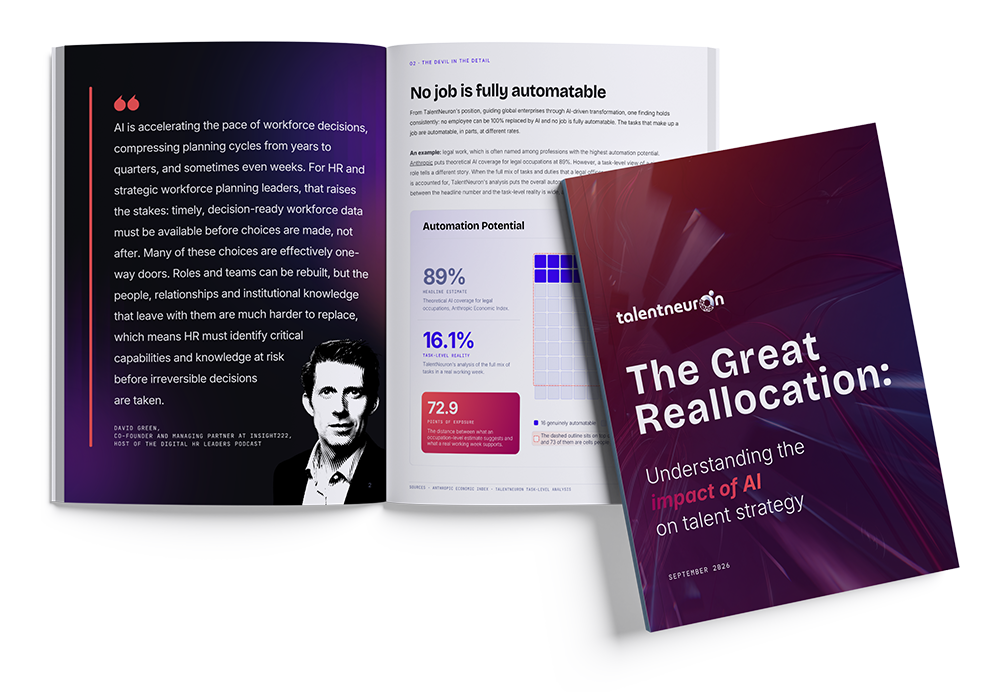
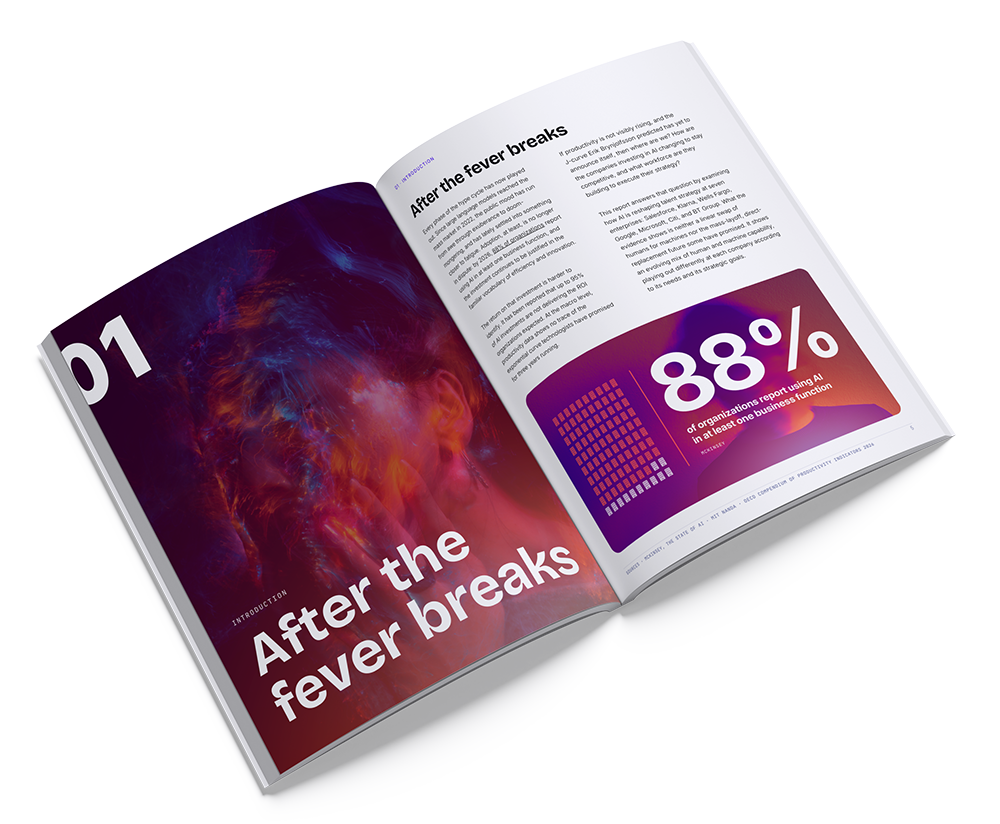
There is no playbook for AI-led workforce transformation. So, we went looking for one in the hiring data of organizations investing aggressively in AI: Salesforce, Klarna, Wells Fargo, Google, Microsoft, Citi, and BT Group. What we found wasn't a single strategy. It was several different playbooks, running in parallel, according to each organization's goals and needs.
AI investment doesn't produce one outcome, it produces a set of choices about headcount, seniority, location, and skills, and those choices look different depending on where you sit. For workforce and HR leaders facing the same decisions without a precedent to draw on, The Great Reallocation is valuable insight into how AI is impacting organizations.