
5 Shifts That Will Redefine Workforce Planning in 2026
.svg)
5 Shifts That Will Redefine Workforce Planning in 2026
A pragmatic look at what’s actually changing and why this time feels different


Every industry produces its own mythology of predictions. Over the past few decades, HR and workforce-adjacent industries have cycled through enough of them to fill a museum: self-driving trucking fleets, robo taxis, an office in the Metaverse. Some of these arrived eventually, some arrived halfway, and some are still circling the runway.
But AI feels different. Not because it’s magic (it’s not) but because the demand is unprecedented. Every executive I’ve spoken to this year is searching for the same things: Ways to innovate faster, de-risk big bets, and juice greater productivity out of their operating model. AI has become a key catalyst for all that ambition.
And crucially, AI is exposing a fundamental and foundational truth: You can’t automate what you don’t understand.
To work out what’s automatable, what isn’t, and what should change, organizations are being pushed to examine work at a level of detail they've never had to before. Actual work: tasks, skills, responsibilities, processes.
Here is the good news: No job and no human is 100% automatable, but plenty of tasks are. 2026 is the year that automation transformation starts to take shape and organizations begin embracing that reality with a structured, planful approach.
Here are five shifts that are less “prediction” and more like early indicators of where the market is heading.
1. Workforce Intelligence Breaks Free
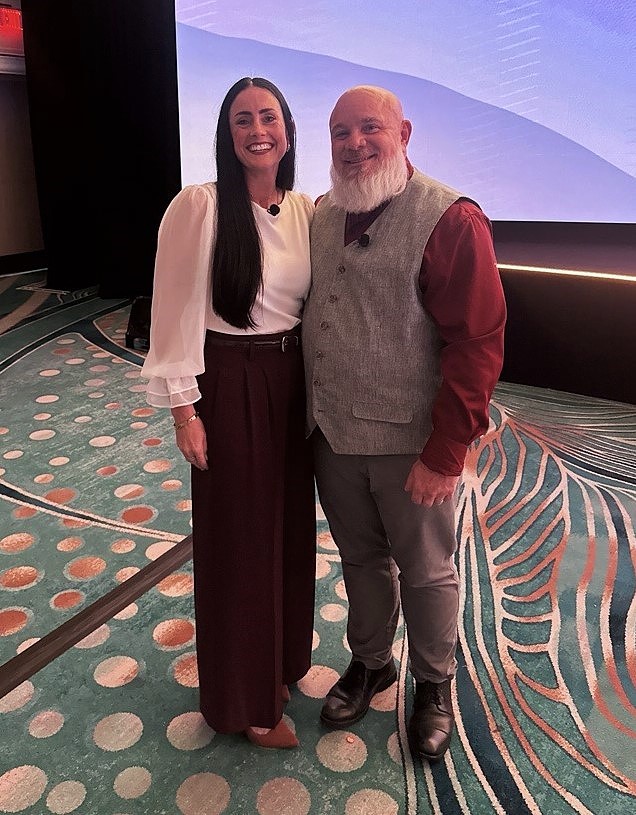
One of the most impactful experiences of my 2025 was presenting with the brilliant Amanda Thompson of Red Hat at the Gartner HR Symposium/Xpo in Orlando. On stage and off, Amanda spoke at length about the change that had occurred within Red Hat when the whole organization began informing decisions with workforce data — a single view of the market across finance, planning, and HR.
That experience isn’t unique. Organizations of all types are increasingly using workforce data as a strategic input, not an HR artifact.
We can see this clearly in the data. In 2025, nearly 50,000 roles were posted globally that required strategic workforce planning skills outside of HR — in the offices of the COO, CFO, and adjacent functions. This group of business operators was effectively nonexistent in 2020 and has grown 34% since 2022.
Working with this audience is now a critical priority. I hear the same message repeatedly: Workforce intelligence needs to live where decisions are actually made. Not in dashboards, portals, or monthly slide decks, but embedded in the tools teams already use: collaboration platforms, internal systems, and operational workflows.
That’s how organizations reduce time-to-action in a fast-moving environment. It closes the gap between knowing something and doing something about it, and it creates a shared view of work across the business.
Which leads directly to the next shift...

2. Competition is Becoming the Forcing Function
For most of the last decade, workforce strategy operated on long cycles. Decisions about roles, locations, and skills were expensive to analyze, slow to change, and largely invisible outside the organization. Organizational design and job architecture were treated as episodic projects and not ongoing disciplines.
That constraint has disappeared.
AI has sharply reduced the cost and time required to analyze how work is changing both inside the enterprise and across the competitive landscape. As a result, workforce decisions are no longer slow or private. They are increasingly observable and knowable.
Companies can now see, in near real time:
- Where competitors are hiring and where they are pulling back
- Which skills they are investing in as automation advances
- How roles are being reshaped rather than simply replaced
- How companies are adjusting comp and benefits strategies by role and location
This changes the economics of workforce planning. When insight becomes cheap, delay becomes costly. The risk is no longer making the wrong long-term bet, but in failing to notice that competitors have already made their next move.
3. Value Realization for AI in HR Takes Shape
McKinsey & Co.’s recent State of AI report highlighted HR’s laggard status as an AI-enabled function. Just 13% of respondents reported regularly using AI as part of their role.
Why?
Some of this is structural. HR faces higher compliance and legal exposure than any other function, which creates necessary friction. But other constraints have been more practical — limited experimentation at the individual level, and AI that isn’t embedded into real workflows.
On the individual side, many HR teams have historically lacked AI and deep analytics fluency, making it hard to evaluate models, interpret outputs, or translate insight into business decisions. That’s changing quickly. Demand for hard LLM skills among HR hires has risen 127% in the past 12 months, and grown from effectively zero in 2022. Familiarity with AI as a productivity tool is becoming table stakes.
At the workflow level, deploying AI effectively has always required coordination across IT, finance, legal, and business leadership. This is complexity that HR doesn’t fully control, and bandwidth that’s often allocated elsewhere.
But those accessibility barriers are starting to fall away as more third-party tools and solutions fill the usability gap.
4. Data Will Still Matter, But Context Will Matter Much More
Labor market data used to be the differentiator. Increasingly, it’s the starting point.
This isn’t because the data lost value. It’s because organizations are now pulling meaning from multiple sources at once: internal data, external signals, and — more and more — AI-generated context.
A recurring theme in executive conversations this year: “We have the data. What we don’t have is the connection between the data and the decisions we need to make.”
The winners will be those who can translate data into something directly usable in planning, hiring, reskilling, automation, and risk decisions.
Viewed together, these shifts point to something larger:
- Work is becoming more modular
- Insight is becoming more embedded
- AI is becoming more conversational
- Data is becoming more contextual
- Competitive signals are becoming more visible

5. Work Will Be Deconstructed Before it's Reimagined
For decades, organizations have managed work through the abstraction of the job description. It was a useful simplification: stable roles, stable responsibilities, slow change.
AI breaks that model. Automation will target specific tasks — whether they be cognitive, manual, repetitive, or judgment-based — that sit inside roles. To understand where AI can create value, organizations are being forced to examine work at a much finer level of detail.
That means pulling roles apart to understand which activities genuinely require human judgment, which can be automated or augmented, and which no longer make sense in their current form. Skills stop being static requirements and start becoming dynamic capabilities that shift as work changes.
It’s a practical response to rising labor costs, persistent capability gaps, and the growing mismatch between how work is described and how it actually gets done.
2026 won’t bring a wave of fully automated roles. It will bring something more durable: A more granular, task-level understanding of work.
And once organizations start seeing work this way, they don’t go back.
.png)
From Job Architecture to Work Architecture: Designing Roles for the Age of AI
.png)
Monitoring: What Comes After the Plan?
.png)