
Identify Human and Bot Potential with Task Mapping
.svg)
Identify Human and Bot Potential with Task Mapping
How smart leaders are deconstructing roles to move beyond routine tasks and unlock high-value innovation


Artificial intelligence and automation are no longer future concepts — the next great transformation is already here. By 2030, an estimated 86% of companies worldwide will be transformed by AI, according to the World Economic Forum, and human workloads are expected to decrease by 15% as technology takes over routine tasks.
But while AI offers massive productivity potential, capturing that value is rarely straightforward. Organizations that rely on generic AI results or siloed, one-time reports often fall behind in a tangle of imprecise data and failed pilots.
To succeed, leaders must shift from viewing technology as a simple efficiency tool to seeing it as a strategic partner that elevates human potential. This requires a structured, data-driven approach to workforce planning.
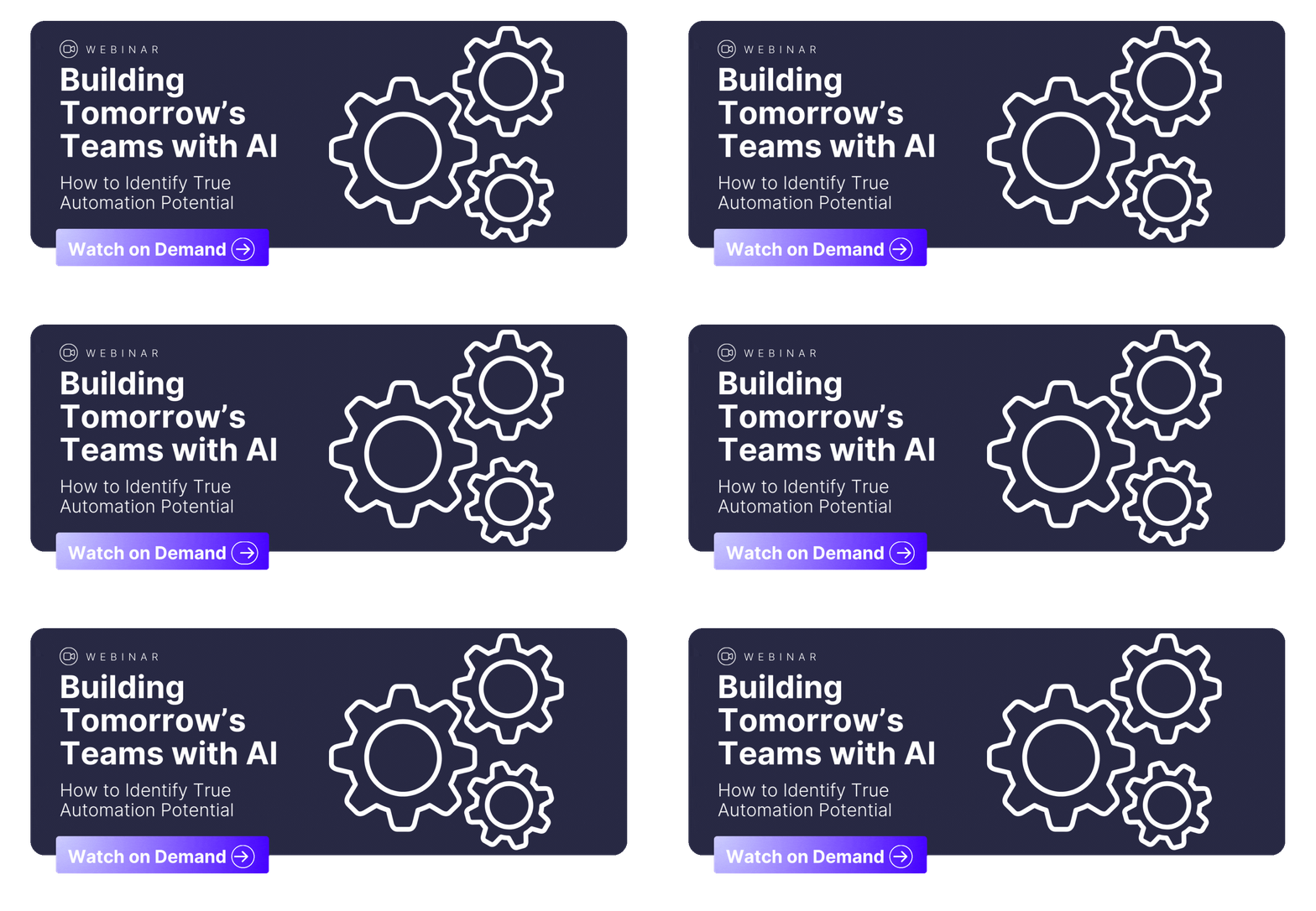
TalentNeuron Senior Strategic Consultant Twisam Datta breaks down why it's critical for business leaders to address AI and automation now during the webinar "Building Tomorrow's Teams with AI: How to Identify the True Automation Potential in Your Org."
The Challenge: Navigating the Messy Middle of Transformation
The fundamental hurdle isn’t just adopting the tech — it’s managing the massive ripple effects on your people. The World Economic Forum predicts that by 2030, 22% of jobs will be redesigned or eliminated, and 39% of existing core skills will become outdated.
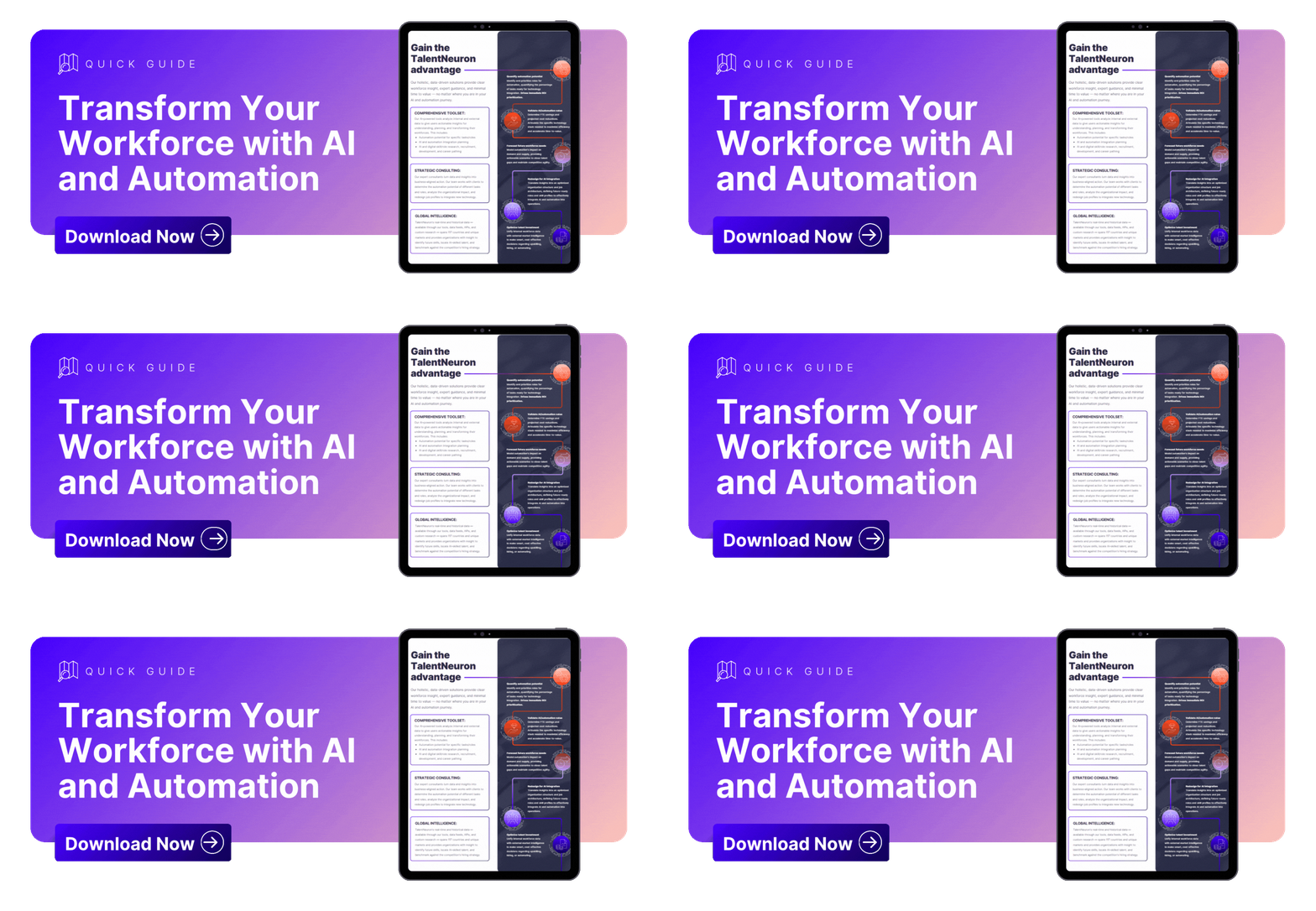
Download the full quick guide, "Transform Your Workforce with AI and Automation."
This means nearly 60% of your workforce will need significant reskilling. And for many organizations, the pressure to quickly deliver results is overwhelming because every stakeholder has a different priority:
- CEOs want to know where they can realize the biggest productivity gains.
- CFOs are focused on cost savings and ROI.
- CHROs are concerned with widening skill gaps and the future of talent.
Without a concerted, enterprise-wide strategy, even a single step forward can result in several setbacks if the transformation lacks clarity.
4 Strategic Imperatives for an AI-Ready Workforce
To help leaders navigate this journey, here are four imperatives for integrating AI and automation into your workforce strategy.
1. Move from task execution to strategic opportunity
The goal of automation isn't just about "doing" tasks; it's about "thinking" and learning to do them better. By deconstructing roles into specific tasks, you can identify which rote activities can be handled by AI. This frees your employees to focus on high-value, human-centric work — activities that require critical thinking, emotional intelligence, and creativity.
"Automation will target specific tasks — whether they be cognitive, manual, repetitive, or judgment-based — that sit inside roles. To understand where AI can create value, organizations are being forced to examine work at a much finer level of detail."
David Wilkins
TalentNeuron's Chief Product and Strategy Officer
Read more of his blog post, "5 Shifts That Will Redefine Workforce Planning in 2026."
2. Map Your Automation Maturity
Not every organization is at the same stage. Successful companies typically move through a four-stage automation journey:
- Detection: Identifying which roles are most impacted and by what percentage.
- Impact Analysis: Quantifying the cost savings and full-time equivalency (FTE) changes.
- Strategic Planning: Modeling scenarios to see how automation closes talent gaps.
- Redesign: Reshaping the organization’s structure and job architecture for the future.
3. Adopt a build-buy-borrow-bot framework
Traditional talent strategies (build, borrow, and buy) are no longer enough. You must now incorporate "bot" into the equation. This means evaluating whether a talent gap is best filled by hiring new talent, upskilling existing employees, or deploying an automated solution. This holistic view ensures you are optimizing your talent investment and making cost-effective decisions.
4. Ditch spreadsheet sprawl for centralized intelligence
Your AI decisions are only as smart as the data behind them. Relying on fragmented spreadsheets and unmanageable data leads to confusion and silos that slow down transformation. To execute with confidence, you need a single source of truth that unifies internal workforce data with real-time external market intelligence.
TalentNeuron's Christian Vetter, Director of Strategic Workforce Planning, demonstrates how data reveals not only the automation impact on specific roles, but also what it might mean for the entire organization.
Bottom Line: Start Small, But Start Now
The automation journey is a marathon — not a sprint — but the window to act is closing. With only a few years left until 2030, it's critical to begin identifying your automation potential today.
Whether you are just exploring what’s possible or are ready to redesign your entire job architecture, the key is to stay agile. By prioritizing the human element and supporting it with precise data, you can build a workforce that isn't just future-ready — it's future-proof.
.png)
I don't know what to call this anymore. Maybe you do.
.png)
From a Single Task to the Whole Organization: Making Automation Potential Measurable
.png)